
Zero Gravity Jet Flight in the USA
We can offer you the whole aircraft including the crew on the date of your request (for Groups of 1 up to 36 people). Alternatively, we can offer you to join a Zero-G flight as a passenger. Please contact us about current dates.
$9,900 & 5% Sales Tax for flight in Boeing 727 from multiple US locations
Parabolic Flight – Experience Total Weightlessness
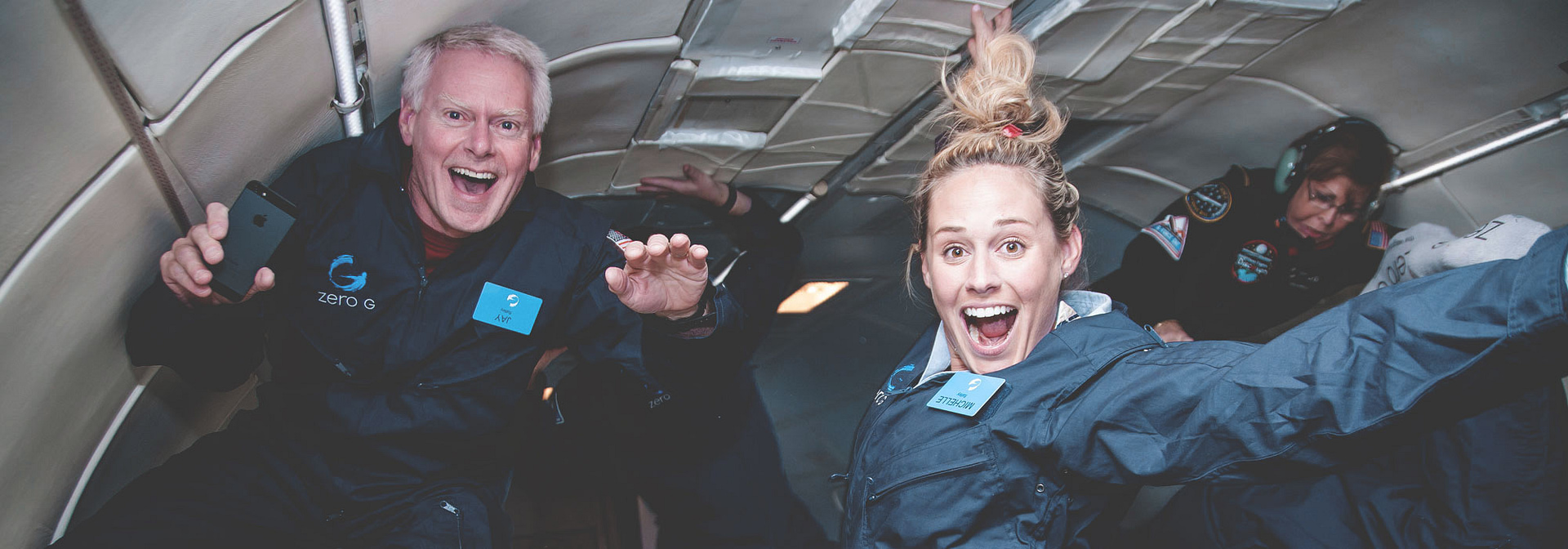
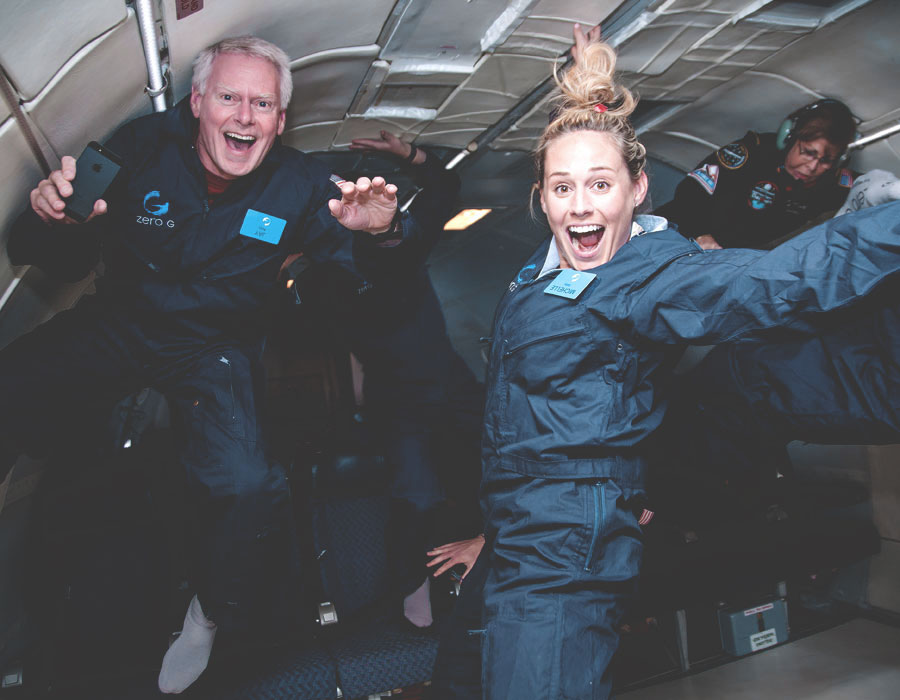
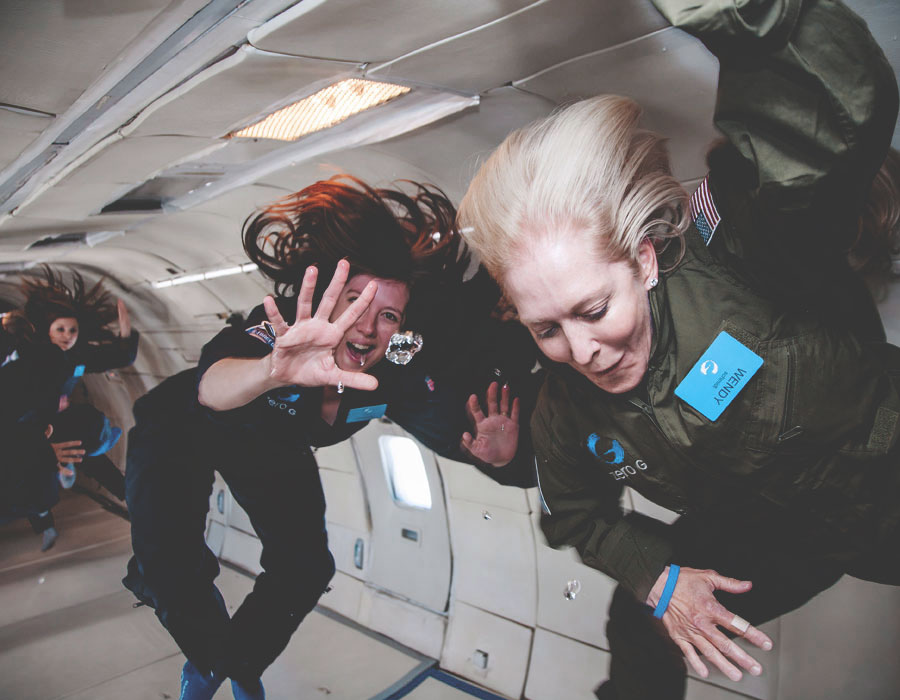
The images of floating astronauts in total weightlessness fascinate everybody. This pleasure of weightlessness isn’t only possible on the international space station ISS, but also far lower – with a parabolic flight onboard a modified Boeing 727 in the United States.
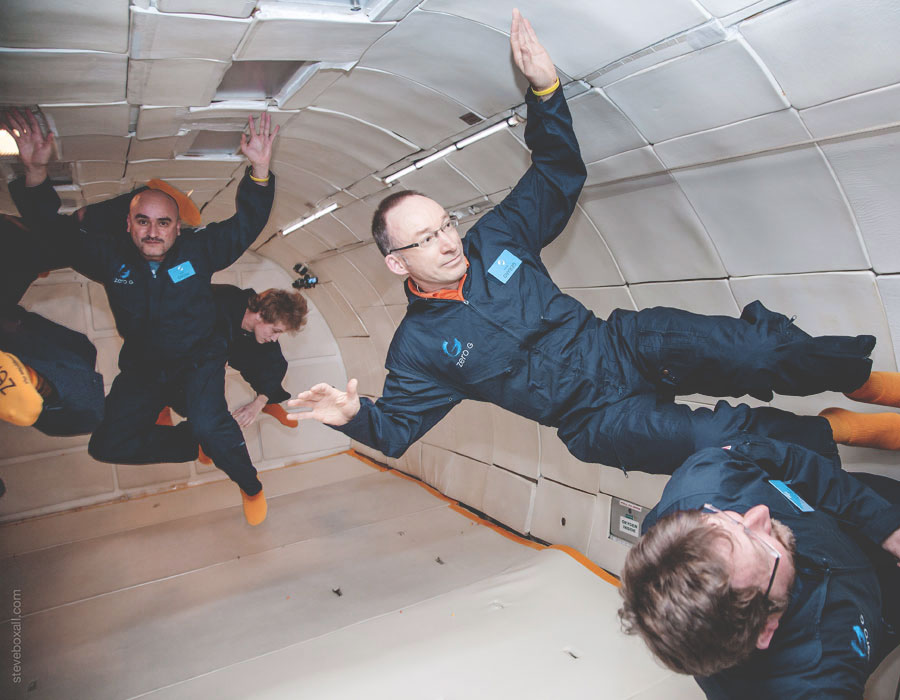
How Does Weightlessness during a Parabolic Flight Work?
How can weightlessness be achieved? Parabolic flight is an aerobatic maneuver that our customers can also request during our fighter jet flights. Only a small parabola is possible there, and you can only “float” within the constraints of your seat belts.
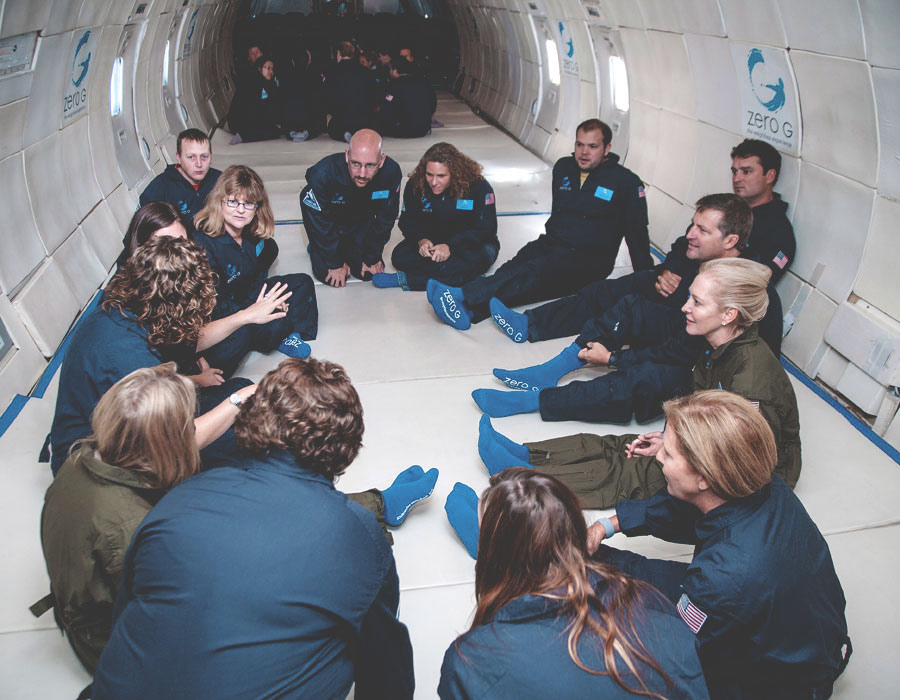
In the much larger Boeing 727 in the US and the Il-76 in Russia, it works like this: The pilot first gathers momentum and then starts a rapid ascent, which results in a force about twice the normal gravitational force of the earth. Afterwards, the pilot pushes the controls forward, so that the aircraft follows a parabolic trajectory and eventually ends up in a steep dive. During this phase, the pilot can achieve the required weightlessness by monitoring a G-sensor. One phase of weightlessness lasts about 25 to a maximum of 30 seconds.
In this manner, zero-G parabolic flights are flown. Apart from total weightlessness, a few parabolas are also flown with the same gravitational pull as the moon, i.e. about 1/6th G.
Experience Total Weightlessness – Zero-G
We’d love to organize a Zero Gravity flight for you. ZeroG flights in the USA start from different Zero Gravity flight locations, at specific flight dates. Primary Zero Gravity flight locations are Cape Canaveral FL, Las Vegas NV, and San Francisco CA. But Weightlessness flights also start from Austin TX, Dallas TX, Atlanta GA, Chicago IL, New York NY and Washington DC.